Mold cleaning
Remove release agents, light oxidation and residues from industrial molds.
Product family / 01
Controlled surface cleaning where finish quality matters.
Pulsed fiber laser cleaning configurations for precision removal of rust, paint, oxides, oil and coatings with limited heat input to the substrate.
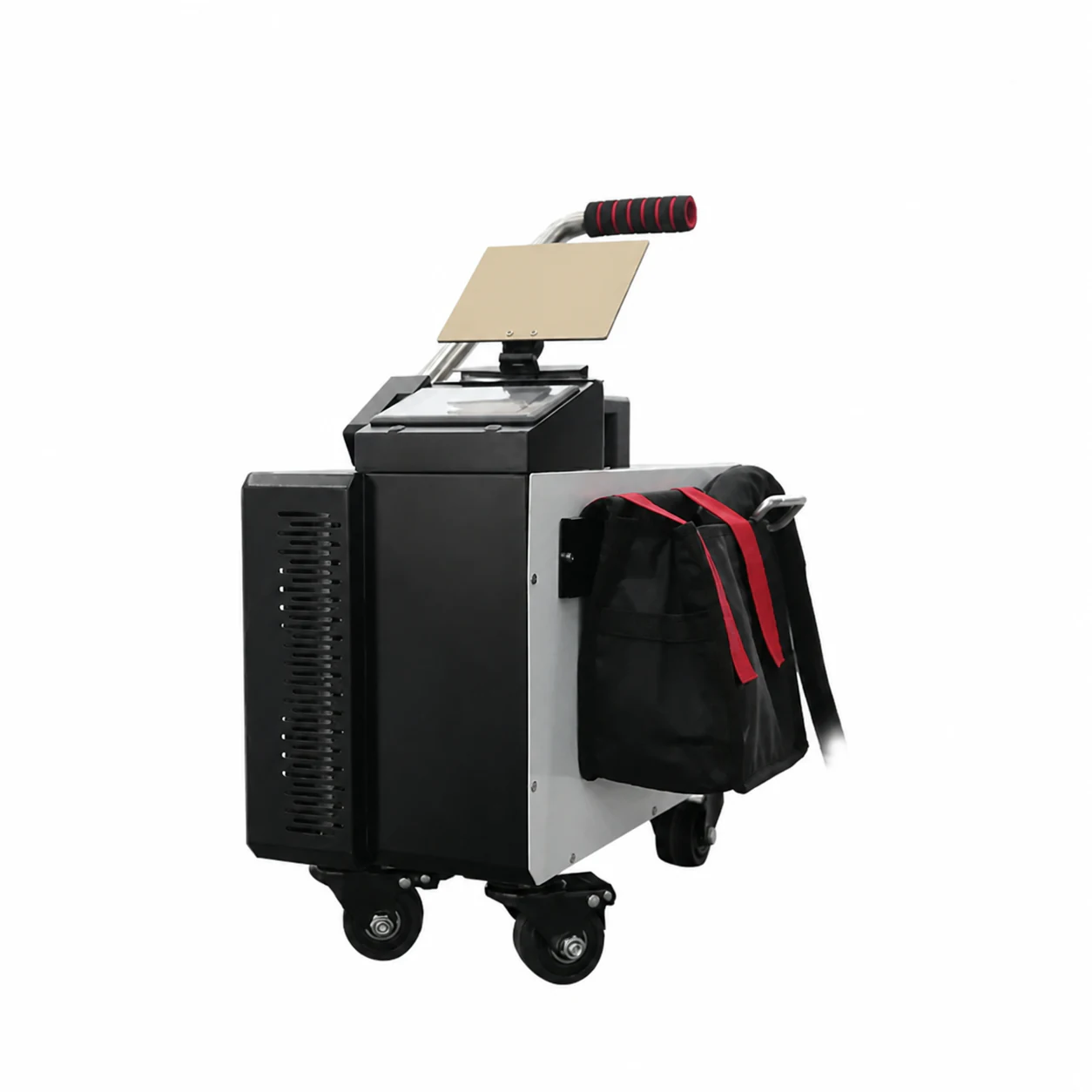

Reference configuration · Final equipment and options subject to written quotation.
Product overview
Pulse cleaning delivers energy in short, controlled bursts. It is generally selected when the customer needs accurate contaminant removal, lower thermal influence and better control over the finished surface.
The right platform depends on contamination type and thickness, substrate sensitivity, required finish, working area and target speed. Higher power can increase throughput, but process tuning and sample testing remain essential.
Equipment views
These images show representative equipment formats for initial discussion. Cabinet, laser source, control system, working head and accessories are confirmed for each order.
Reference specification
Indicative information for early project screening. Exact components, performance, certification, warranty and availability require written confirmation.
Where it fits
Use these examples to frame the requirement. Final results depend on material, geometry, process settings and acceptance criteria.
Remove release agents, light oxidation and residues from industrial molds.
Prepare or restore body panels, parts, weld zones and assemblies.
Controlled cleaning before coating, bonding, welding or inspection.
Trial-based cleaning of metal, wood, stone and heritage surfaces.
Selection workflow
Send clear photos and identify the base material and coating.
State the area, contamination thickness and desired finish.
Use sample trials when appearance or substrate protection is critical.
Finalize power, cooling, head, cable, voltage and accessories.
Common questions
These answers are general guidance. Send the actual workpiece details for a configuration review.
Choose pulse cleaning when surface control, lower heat input and finish quality matter more than maximum removal speed.
No. Power affects throughput, but pulse width, frequency, scan pattern, substrate and contamination all influence the result.
Selected surfaces can be processed, but sample testing is recommended because finish and heat sensitivity vary.
Material, contaminant, thickness, working area, target speed, destination voltage and preferred working format.
Need a confirmed configuration?
Include material, dimensions, process requirement, target speed, electrical supply and destination.